The problem: You keep patching the life instead of asking why it needs so many patches.
You know how technical debt happens. Nobody usually chooses disaster in one clean decision. The deadline is close. The workaround works. The comment can come later. The test can come later. The cleanup can come later. Nothing breaks today, so the debt feels imaginary.
Then one day a simple change takes three hours because every earlier shortcut is now part of the architecture.
Human burnout often works the same way. You skip sleep for a release. You order dinner because cooking is one decision too many. You answer your partner in fragments because the codebase is still in your head. You stop calling friends because you will catch up when things calm down. You keep making small compromises that seem reasonable in isolation.
Human debt accumulates the same way
A month later, the ordinary life is harder to change because everything is connected to everything else. You are tired, so you order food. The food makes you sluggish, so work takes longer. Work takes longer, so you sleep later. You sleep later, so you wake with less patience. Less patience damages the relationship, which makes the evening feel heavier, which makes work look like the one place where you still know what to do.
The system still compiles. That is the dangerous part.
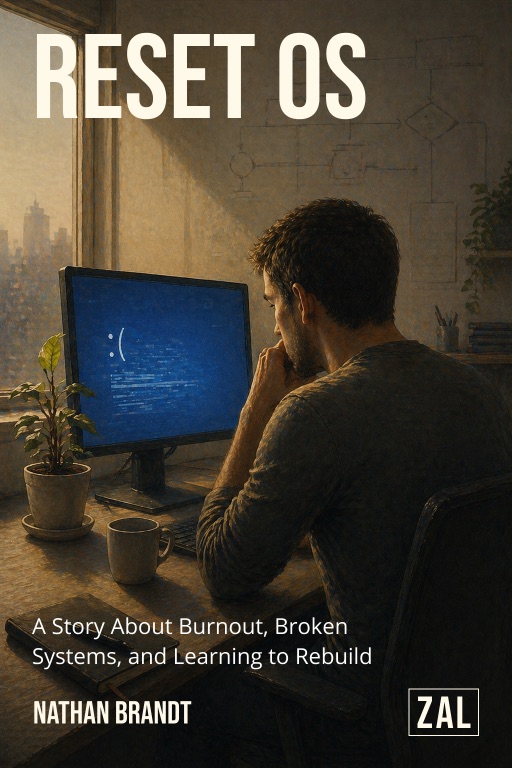
Reset OS is built around this recognition. Mason’s problem is not one bad week. It is accumulated debt: sleep debt, attention debt, relationship debt, body debt, recovery debt. His life still runs, but every change costs more than it should.
Why technical people recognise it
This is why technical people may recognise the book quickly. It does not mock the instinct to analyse. It respects that instinct. Mason is not wrong to think in systems. He is wrong only when he tries to use systems thinking as another way to avoid admitting the human cost.
The surface-level tool is a debt label. Pick one recurring patch in your life and name the debt underneath it. Not the symptom. The debt. If you keep ordering food, is it food debt, sleep debt, planning debt, or decision debt? If your relationship conversations keep happening too late and too badly, is it relationship debt or attention debt? If you keep scrolling until midnight, is it rest debt, loneliness debt, or avoidance debt?
Name the debt underneath
Naming the debt will not pay it off. It will stop you pretending the patch is the whole issue.
Then ask one small maintenance question: what would reduce the interest by tomorrow? Not solve the whole system. Reduce the interest. Prepare one simple meal. Put the laptop away before dinner. Move one difficult conversation earlier by ten minutes. Sleep before the second wind turns into another hour online.
The useful thing about the debt metaphor is that it removes some of the moral drama. Debt is not paid off by hating yourself. It is paid off by seeing the balance, stopping the interest where you can, and making regular payments that are boring enough to repeat.
That is also why Reset OS works as a story instead of a lecture. Mason does not become a better man because someone tells him to care more. He starts to see where the costs are accumulating. He sees that the same mind that can understand a fragile system at work has been refusing to apply that honesty at home.
A lot of men will recognise that split. At work, they can be precise. They can name bottlenecks, dependencies, bad incentives, fragile processes, and broken feedback loops. At home, they call the same things laziness, mood, failure, or just a rough week. The book closes that gap. It lets the same practical intelligence turn back toward the man using it.
Where the story goes deeper
That matters because burnout advice often sounds either too clinical or too inspirational. Reset OS stays closer to the ground: tabs open, food forgotten, relationship debt building in the same room, a man trying to recover without turning recovery into another optimisation project.
That is article-level help: enough to make the pattern visible and give you one move. The book goes further because debt has history. Mason has to understand how his work, apartment, relationship, sleep, body, and self-respect became one overloaded system. Reset OS gives that story room to breathe. The Quiet Weight places it inside the wider map of modern male pressure.
One thing to try
Pick one recurring patch in your life and name the debt underneath it: sleep debt, relationship debt, admin debt, health debt, or attention debt.
Where to go next
Reset OS turns the tech-debt metaphor into a full story about work, relationship debt, and recovery. Start with Reset OS. If you want the connected story route, also look at The Quiet Weight.