
Nine books · Problem-led essays For men who are tired of performing fine. Zero-Audience Library · MMXXVI
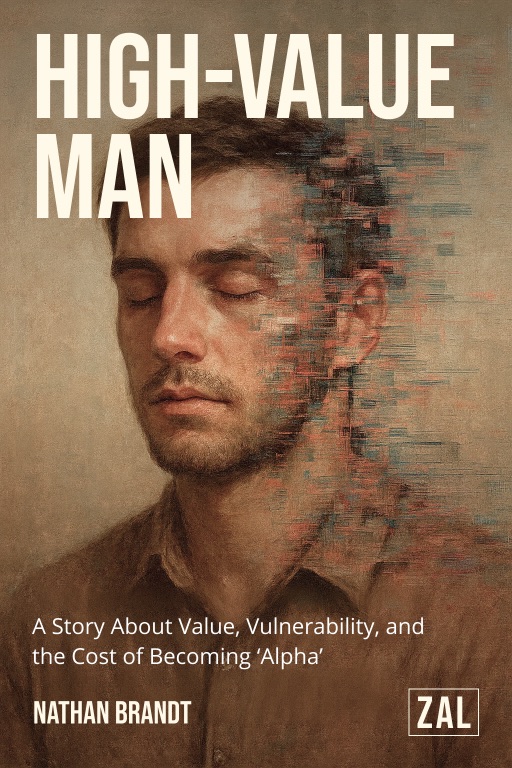
High-Value Man cover

Reece's story

They found you when you were lonely. That was the product.

A story about self-improvement content, masculine hierarchy, dating anxiety, crypto promises, and the quiet need underneath it all.

$4.99 EPUB + PDF About 4 hours Coming soon

The diagnosis

The trap of certainty when you feel invisible.

The danger is not that every piece of self-improvement advice is useless. Some of it is ordinary and helpful: lift, sleep, dress better, talk to people, stop hiding. The danger is what happens when good advice arrives wrapped around a verdict on your worth.

High-Value Man is for the man who found advice when he was lonely, and slowly realised the advice came with a scoreboard. The algorithm did not create his ache. It found it, named it, blamed someone else for it, and offered him a formula that made the pain feel organised.

Meet Reece

A lonely software developer in a nice apartment that feels like a hotel.

Reece Henley is thirty-one, lives in Seattle, and looks fine from the outside. He has a stable remote software job, a modern one-bedroom apartment, clean furniture, and a life that would not alarm anyone who was not close enough to see the silence inside it.

On a Saturday night, he is in bed with Tinder, Instagram, and LinkedIn open. Zero matches. Wedding photos from people he has lost touch with. Promotions. bodies. holidays. proof that everyone else seems to be moving through life with something he does not have. Then YouTube offers him an answer: a confident man, a clean theory, a promise that he can stop being invisible if he learns the game.

The reframe

The industry needs the wound to stay open.

Reece is not stupid for being pulled in. The system works because it offers lonely men something they rarely get: recognition, certainty, language, and a room full of men who sound like them. For a while, that feels like relief.

The book's central question is not whether men should improve. They should. The question is whether the person selling the improvement needs you to keep believing you are low-value. High-Value Man follows what happens when Reece mistakes a sales funnel for a map out of loneliness.

Inside the book

What Reece has to see clearly.

The algorithmic hook

How dating-app rejection, social comparison, fitness content, and late-night loneliness combine into the perfect entry point for status-based advice.
The high-value scoreboard

Why ordinary self-improvement becomes corrosive when every choice is turned into evidence that you are winning, losing, alpha, invisible, or behind.

The guru economy

Orson Kirby, the Discord, the retreat, the testimonials, the crypto promise, and the way belonging can be packaged to men who badly need it.

Performance versus connection

Reece's real human moments work when he is not performing. The techniques fail when he tries to become someone impressive instead of someone present.

The boring exit

The way out is smaller than the fantasy: honest apologies, ordinary hangouts, lifting because it feels good, calling his mum, and showing up where real people can know him.

Read a page

From The Scroll.

The apartment was quiet. Too quiet. Capitol Hill on a Saturday night and Reece could hear every sound from the street below. Laughter. Groups of people moving between bars. Living lives that looked nothing like his.

His apartment was nice. One-bedroom, modern, big windows that framed the Seattle skyline. West Elm furniture. Clean because he was barely there mentally. Nothing personal on the walls. Could be an Airbnb. Could be anyone's place.

It felt like a hotel.

Where it fits

Start here if the trap is advice that makes you feel worse.

High-Value Man stands on its own as Reece's story. It also deepens the guidebook's chapter on self-improvement, dating apps, gurus, algorithms, and the moment when pain becomes a market.

If The Quiet Weight gives you the full map, High-Value Man follows one specific route through the trap: loneliness, certainty, status, performance, collapse, and the ordinary connections that were available before the sales pitch arrived.

What you may recognise

The Saturday night scroll that starts with self-improvement and ends with contempt for yourself and everyone else.

The scoreboard that keeps moving just far enough ahead that you never get to rest.

The quiet loneliness that was there before the advice found it and gave it a name.

Coming soon

High-Value Man

This one isn't out yet. Leave your email and you'll hear the day it is.

One email when High-Value Man is released. Nothing else.

Related essays

Start with the problem, then come here.

Questions

Before you buy.

Is this just an anti-manosphere book?

No. The book is critical of the manosphere and guru economy, but it treats Reece seriously. The point is not to mock men who get pulled in. The point is to show why the offer feels so compelling when a man is lonely.

Does the book say self-improvement is bad?

No. Reece keeps some good things: lifting, dressing better, becoming slightly more confident, talking to people. The book separates real improvement from performance, dependency, and paid certainty.

Do I need to read the guidebook first?

No. High-Value Man stands alone. The guidebook is the wider map if you want to connect Reece's trap to loneliness, shame, numbing, identity, and long-term change.

What formats are included?

High-Value Man includes EPUB and PDF downloads. It is also included in the complete bundle.

This is Chapter One of High-Value Man.

Chapter 1: The Scroll

Saturday night, 11:47 PM. Reece Henley lay in bed with his phone eight inches from his face. Three browser tabs open.

Tab 1 - Tinder: Been swiping for an hour. Forty-three right swipes. Zero matches. The same profiles from yesterday were back in rotation. Sarah, 27, “loves hiking and tacos.” She’d ignored him twice now.

Tab 2 - Instagram: College roommate’s wedding photos. Matt looked happy. Everyone coupled up, smiling, successful. Reece hadn’t been invited. They’d lost touch two years ago when he moved to Seattle for work. Three hundred miles might as well be three thousand.

He scrolled further. Fitness influencer with impossible abs. Perfect lighting. Top 1% genetics. Comments full of flame emojis. Reece looked down at his own stomach. He’d been lifting six months. Nowhere close.

One more scroll. Friend from high school with girlfriend on a beach in Thailand. Caption: “Living my best life 🌴”

Tab 3 - LinkedIn: Former classmate just announced promotion to Senior Engineer at Google. Another one launched a startup. Another got engaged. Everyone was “excited to announce” something Reece didn’t have.

He closed all three tabs.

The apartment was quiet. Too quiet. Capitol Hill on a Saturday night and Reece could hear every sound from the street below. Laughter. Groups of people moving between bars. Living lives that looked nothing like his.

His apartment was nice. One-bedroom, modern, big windows that framed the Seattle skyline. West Elm furniture. Clean because he was barely there mentally. Nothing personal on the walls. Could be an Airbnb. Could be anyone’s place.

Like a hotel.

Reece opened YouTube.

The algorithm, knowing him better than he knew himself, offered: “Why Modern Women Ignore 80% of Men (And How To Join The Top 20%).”

Twelve million views. Thumbnail showed a guy in a suit next to a Lamborghini. Comments were turned on. Top comment: “This changed my life. Wish I’d seen this five years ago.”

Reece’s finger hovered over the video.

He should go to sleep. Had to text his mom tomorrow. She worried.

He tapped play.


The video started with upbeat music. Guy in his thirties, good-looking, home studio setup. He made eye contact with the camera like he was talking directly to Reece.

“Let me ask you something. When’s the last time you felt invisible?”

Reece shifted against his pillow.

“You work hard. You’re decent-looking. You have your life together. But women swipe left. Friends are busy. Nobody notices when you walk into a room.”

The guy leaned forward.

“It’s not your fault. The game is rigged. Dating apps favor the top 20% of men. Studies show women rate 80% of men as below average. BELOW AVERAGE. The math doesn’t even work.”

Reece paused the video. Pulled up another tab. Googled “80 20 rule dating.”

Results everywhere. OkCupid study. Tinder data analysis. Charts showing message rates, match rates, response rates.

He went back to the video.

“Society tells you to be nice. Be yourself. Be respectful. And where has that gotten you? Alone on a Saturday night while other guys get everything.”

Reece looked around his empty apartment.

“But here’s the truth they don’t want you to know. You CAN join the top 20%. You just need to understand the game. And I’m going to teach you.”

The video was eighteen minutes long. He watched the whole thing. Then another.

“10 Things Women Won’t Tell You (But Wish You Knew).”

Then another.

“How To Build Undeniable Confidence In 30 Days.”

The early content was reasonable. Hit the gym. Dress better. Develop skills. Work on yourself.

Reece checked the time. 1:23 AM.

He should sleep.

One more video.

This one was different. Harsher. “Why Nice Guys Finish Last (And Always Will).”

The guy in this video was angrier. Talked about hypergamy. Female nature. How men had been lied to by society. How women only wanted the top tier.

Comments were full of men sharing their stories. Rejections. Loneliness. Years wasted being “nice.”

Reece recognized the feeling in those comments.

He’d felt invisible his entire adult life. Three relationships that ended the same way: “Too intense.” “Too clingy.” “You’re great but…”

His father had left when Reece was nine. His mom worked two jobs to keep them afloat. Reece had learned early that needing people made them leave, so he’d stopped needing anyone. Worked great until he was twenty-eight and completely alone.

Remote software developer. Moved to Seattle two years ago for a $95K job. Good benefits. Stable.

But he worked from home in an apartment where nobody knew him. Gym where everyone had headphones in. Coffee shops where baristas smiled at everyone the same way. Standup meetings with coworkers he’d never met. Slack conversations he barely participated in. Weekends of meal prep and movies alone.

He couldn’t remember the last time someone had touched him.

The video kept playing.

“Your father didn’t teach you this. Society feminized you. But I’ll fix it.”

Reece’s throat tightened.

Another video appeared in the sidebar. Different creator. Lamborghini in the thumbnail. Dubai skyline. Guy with perfect hair and expensive watch.

“Orson Kirby - The Truth About Status And Success.”

Reece clicked.


Orson Kirby didn’t look like the other guys. Taller. Better-looking. The kind of face that made cameras like him. He stood next to a yellow Lamborghini in what looked like a marina parking lot.

“I make seven figures a year. I live in Dubai. I date models. And five years ago I was exactly where you are.”

Reece doubted that. Kirby looked like he’d won a genetic lottery.

“Everything changed when I stopped listening to society’s lies and started understanding how the world actually works.”

The video showed Kirby at a pool party. Beautiful women. Bottle service. Other successful-looking guys.

“The top 20% of men get 80% of women. It’s not fair. But it’s reality. You can either complain or learn to join them.”

Kirby’s voice was smooth, confident. Like he had all the answers.

“I’m going to show you exactly what I did. No theory. No fluff. Just the proven system that took me from invisible to undeniable.”

The video was a masterclass in persuasion. Kirby showed his lifestyle. His cars. His apartment. His girlfriend. Then he showed “before” pictures. Regular guy. Normal clothes. Awkward smile.

“This was me at twenty-five. No success with women. No money. No respect. I was angry. Desperate. Invisible.”

Reece’s phone screen reflected in his eyes.

“Then I figured out the formula. And now I’m going to give it to you. Free.”

The video linked to more content. A YouTube channel with hundreds of videos. A Discord community. An email newsletter.

Reece subscribed to all of it.

2:47 AM now.

The algorithm kept feeding him videos. Each one explained his pain in a way that felt true.

The game was rigged. Society had lied to him. His loneliness wasn’t his fault. But there was hope, a formula, men who’d figured it out and were willing to teach him.


Sunday morning, 9:15 AM. Reece woke up to his phone still in his hand. YouTube app still open. Battery at 12%.

He’d fallen asleep watching Orson Kirby explain frame control.

Reece plugged in his phone and made coffee. The Seattle morning was gray through his big windows. He should go for a run. Do laundry. Meal prep for the week.

Instead he opened his laptop.

Orson Kirby’s channel had 847,000 subscribers. The videos went back three years. Reece started from the beginning.

Early videos were Kirby in a regular apartment. Mindset tips, gym advice, style. Standard self-improvement.

Then the production quality improved. Lighting, camera work, Dubai, lifestyle clips. The Lamborghini. Rooftop pools. Beautiful women.

Comments on every video were the same.

“This changed my life.”

“Wish I’d found this sooner.”

“Kirby is the only one telling the truth.”

“I was bluepilled for so long. Finally awake now.”

Bluepilled. Redpilled. Terms Reece had seen before but never really understood. He Googled them.

Bluepilled: Believing society’s lies about how dating and success work.

Redpilled: Understanding harsh truths about female nature, status, and power.

The terminology felt dramatic. But the concepts underneath made sense to Reece.

He’d been bluepilled. Believing that being nice and respectful and yourself was enough.

And it hadn’t worked.

Maybe the redpill guys were right. Maybe there was a truth about how the world worked that nobody wanted to admit.

Reece watched five more videos.

His coffee went cold.