The problem: You want to improve, but the language keeps making you feel lower.
There is a particular route men take out of feeling forever alone, and it starts somewhere reasonable before it stops being reasonable.
The reason “high-value man” advice works at first is that not all of it is nonsense. Train. Dress better. Build skills. Stop drifting. Take responsibility for your money, your body, your time, and the way you present yourself. A lot of men need those sentences, and there is no shame in needing them.
That is what makes the trap effective. It does not usually begin with poison. It begins with relief. Finally, someone is saying something direct. Finally, there is a plan. Finally, the confusion around dating, status, money, masculinity, and rejection has a set of rules.
The help can turn into hierarchy
The turn happens when help becomes hierarchy. When responsibility becomes contempt. When confidence becomes never showing uncertainty. When women become status objects and other men become ranks. When every ordinary insecurity is converted into proof that you need another course, another mentor, another system, another paid room where the answer is always just beyond the next purchase.
Good advice sends you back into your life more capable and more reachable. Bad systems make you dependent on the system and suspicious of ordinary human connection.
That distinction matters because many men who find this world are not arrogant monsters. They are lonely, rejected, embarrassed, inexperienced, hurt, or tired of feeling invisible. They want a map. They want someone to tell them what to do. They want the pain to mean something other than “I am simply unwanted.”
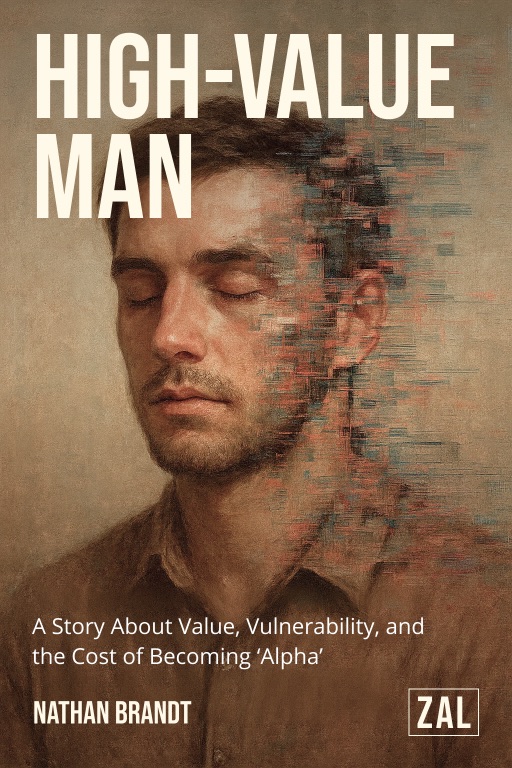
Reece’s story in High-Value Man is not about a foolish man falling for cartoon villains. It is about a lonely man being offered a map at exactly the moment he needed one.
Who this advice is designed for
The harder thing to see is that high-value man advice is not primarily designed to help men become more capable. It is designed to keep men engaged with the community that sells the advice.
The mechanism is not complicated. A man arrives in pain. The community offers a framework that explains the pain and gives it shape: your results are low because your value is low, your value is low because you lack discipline or status, and the path forward is through the system being offered. The man feels seen. The pain has a cause. The cause has a remedy. He buys in.
What happens next is the tell. If the advice genuinely improved outcomes, the man’s need for the community would reduce over time. But the scoreboard keeps moving. There is always a new level to reach. A new metric that matters more now. A new reason you are still behind. The community needs men to remain almost improved, but never fully free of the framework.
A lot of men feel this without being able to articulate it. The advice is working and I keep feeling worse. I am improving and the bar keeps moving. I followed the rules and I am angrier than I was before. That gap between genuine effort and persistent dissatisfaction is not a personal failing. It is the product functioning as intended.
The scoreboard never ends
The problem with a lot of high-value advice is not improvement. It is the scoreboard underneath it. There is always someone richer, leaner, colder, more dominant, more desired, more optimised, more untouchable. The system keeps moving the line because the line is what keeps you engaged.
You may start lifting because you want self-respect. Good. But if every workout becomes evidence in a trial about your worth, the gym becomes another courtroom. You may want to date better. Fine. But if every woman becomes a mirror for your status, you stop meeting people and start collecting results.
That is not freedom. That is performance with a masculine costume.
What it does to how you see other people
One of the quieter costs of spending time inside high-value frameworks is what it does to your ability to see other people as people.
When the primary lens is rank — who has higher status, more money, more options, more capability — ordinary people become data points on a hierarchy. The man across from you at a party is a ranking. The woman you are talking to is a result. The friend who is struggling is evidence that struggling is what happens to low-value men.
This is not always loud. It can be subtle: a slight contempt for anyone visibly needing something, a discomfort with ordinary conversation about feelings, a reflexive dismissal of anything that looks like weakness. These things narrow a man’s world without him noticing. The people he can be real with quietly decreases.
One thing to try
Before taking advice from any account, coach, course, or community, ask one question:
Does this send me back to real habits and real people, or deeper into hierarchy, grievance, and paid dependency?
Real habits look boring: sleep, training, work, money, friendship, courage, kindness, repair, honesty. Real people are inconvenient. They have needs, history, boundaries, and their own inner lives. If the advice makes real life look beneath you, something has gone wrong.
Where to go next
This article gives you a filter. High-Value Man goes deeper into the emotional hook: dating anxiety, status panic, gurus, masculine worth, and the smaller honest life underneath the performance.
One thing to try
Ask whether the advice returns you to real habits and real people, or deeper into hierarchy, grievance, and paid dependency.
Where to go next
If this is the room you are in, start with the book that goes deeper into the pattern without turning it into a performance. Start with High-Value Man.