The problem: The private habit is starting to affect your real relationships.
It is late, and the house is quiet. The habit does not announce itself as a life problem. It arrives as a private shortcut. A way to switch state. A way to get out of boredom, loneliness, stress, resentment, rejection, or the vague flat feeling you do not have language for. Ten minutes later, the edge is gone. Tomorrow can deal with the rest.
That is why porn can be difficult to talk about honestly. The loudest conversations are often moral panic on one side and total defensiveness on the other. Neither helps the man who is not trying to make a public argument. He is trying to understand why something that once felt private and harmless now feels like it has started building walls in his real life.
The habit may be doing a job
Porn is not always the central problem. Sometimes it is the most available anaesthetic. It asks nothing, risks nothing, and gives the body a way to discharge something the man has not named.
That does not make every use catastrophic. It also does not make the pattern meaningless. The question is not, “Am I a terrible person?” The better question is, “What is this doing for me, and what is it costing?”
For some men, the cost shows up as secrecy. For others, it appears as a loss of desire for real intimacy because real intimacy involves another person’s feelings, pace, body, needs, and possible disappointment. Porn can become a world where nobody asks you to be known. That can feel like relief when being known has started to feel dangerous.
The trouble starts when the private pattern begins shaping public life. Avoidance of sex. Distance from a partner. Less patience. More comparison. The strange experience of being physically close to someone while emotionally hidden from them.
The connection between pornography and loneliness
This is the part men rarely hear framed clearly. Pornography and loneliness are not always separate problems. For many men they are the same loop wearing different faces.
Loneliness creates a pressure that needs somewhere to go. When a man has no reliable place to be honest, no intimacy that feels safe, no way to be seen without performing, the pressure builds. Pornography offers a private release that requires nothing from another person. No risk. No rejection. No need to be articulate about what you want or honest about how you feel.
That can work as a short-term pressure valve. The problem is that every time it works, it slightly reduces the urgency to solve the loneliness another way. The loop becomes self-sustaining. Lonely, therefore escape, therefore slightly less likely to address the loneliness directly, therefore lonelier at a deeper level.
Over years, this can quietly hollow out a man’s capacity for intimacy. Not because he has become broken, but because the habit has taken up the space that risk and honesty would need to occupy.
How it creates distance in relationships
A man in a relationship who is using porn regularly to manage difficult feelings is not simply keeping a private habit. He is managing his emotional life in a direction that runs away from his partner.
The emotional discharge that might otherwise drive him toward connection — toward honesty, vulnerability, asking for something, initiating something real — is being redirected privately. The edge comes off. The urgency disappears. The partner, who may have felt the distance without being able to name it, is left with a man who seems present but unreachable.
This can show up as less sex, but it does not always. Sometimes it shows up as sex that feels disconnected — technically present but without the openness that makes intimacy worth having. The body is there. The person is somewhere else.
Neither the man nor his partner may be able to articulate this clearly. He may not connect the habit to the distance. She may interpret the distance as loss of attraction, lack of love, or something about herself. The silence between those two misreadings can last a very long time.
Shame keeps the loop alive
Shame often promises to solve the problem by making you hate yourself enough to stop. It rarely works for long. Shame makes the feeling harder to face, which makes the shortcut more attractive, which creates more shame. The loop gets stronger because each turn adds evidence that you cannot be trusted with the truth.
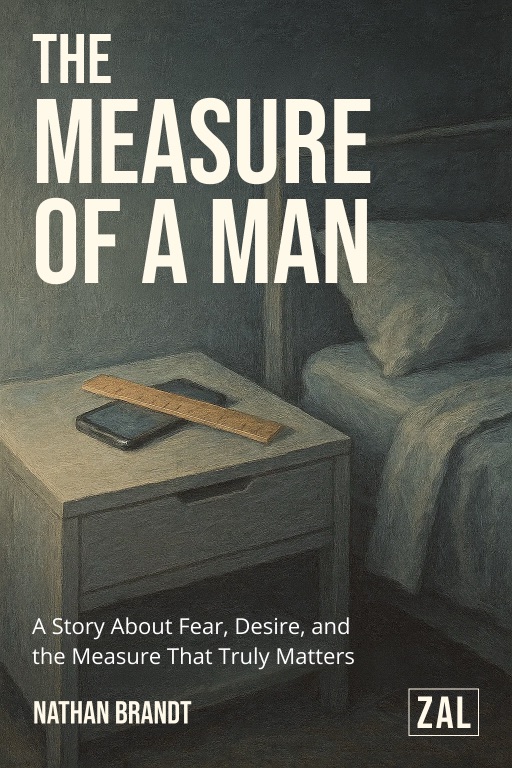
Min-Jun’s story in The Measure of a Man treats this without melodrama. He is not written as a monster. He is a man who has let silence become a structure inside his marriage. That matters because most men do not need more theatrical disgust. They need enough honesty to stop hiding from the pattern.
One thing to try
Separate urge from need. The next time the habit appears, do not start with a heroic promise about never doing it again. Start with the ten minutes before.
Ask: what was I feeling before the urge arrived? What did I not want to think about?
Write one plain sentence. Not to confess. Just to make the hidden job visible.
Where to go next
This article stays at the surface: pattern, cost, and one honest question. The deeper work includes secrecy, sexual anxiety, repair, accountability, and rebuilding trust with another person in the room. That is where The Measure of a Man goes further. The Quiet Weight gives the wider frame for numbing, shame, intimacy, and return.
One thing to try
Separate urge from need. Ask: what am I trying not to feel in the ten minutes before this?
Where to go next
If this is the room you are in, start with the book that goes deeper into the pattern without turning it into a performance. Start with The Measure of a Man.