The problem: You want closeness, then panic when closeness becomes real.
Performance anxiety rarely feels like a tidy issue with a tidy name. It feels like the room getting too bright. It feels like suddenly monitoring your body from outside yourself. Am I hard enough? Am I taking too long? Did she notice? What if this happens again? What does this say about me?
The worst part is that the body can hear the pressure. It does not perform better because you threaten it. It does not relax because you explain that this matters. The more sex becomes evidence about your worth, the less room there is for pleasure, humour, awkwardness, warmth, and the ordinary human reality of two bodies trying to meet each other.
When sex becomes a verdict
Performance anxiety turns sex into a test with no clear rules and too much imagined consequence. The body notices the pressure and behaves like a body under pressure. Then the anxiety treats that reaction as proof that the fear was right all along.
That loop can make a man strangely strategic. He may avoid dating for a while. He may choose people he is not that emotionally invested in because the stakes feel lower. He may move too fast so there is no time for honesty. He may drink more than he wants to. He may leave before the conversation that would make him visible.
None of that means he does not want closeness. Often he wants it badly. That is why the fear is so sharp. Casual rejection can hurt, but being seen by someone you actually like can feel unbearable if your private belief is that one moment will expose you as less of a man.
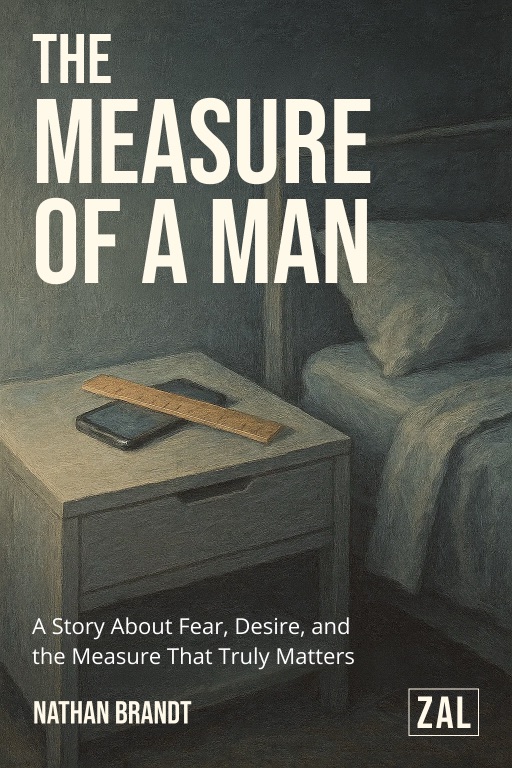
In The Measure of a Man, Carson’s story starts in a hallway because that is where the pattern has led him: close enough to hurt someone, not yet brave enough to tell the truth. The point is not that every man has his exact story. The point is that avoidance often has a trail. You can follow it back to the places where shame started making decisions.
Where the fear comes from
Performance anxiety in sex is not primarily a physical problem, even when it presents as one. It is a problem of meaning. The body has been assigned a job it was never designed for: to provide ongoing proof of a man’s value, adequacy, and masculinity.
That assignment does not usually arrive in one clear moment. It is assembled over time — from locker-room talk that turned comparison into ranking, from pornography that presented an impossible standard as the ordinary baseline, from one comment that landed harder than the person making it knew, from the silence that surrounds male sexual anxiety because admitting it feels like a second failure.
A man carrying all of that into a bedroom is not just nervous. He is performing under the weight of a verdict that has been forming since adolescence. The other person in the room often has no idea how much history is present.
The avoidance pattern
One of the quieter costs of performance anxiety is the way it shapes who a man allows himself to get close to.
Some men unconsciously avoid people they are genuinely attracted to, because real desire raises the stakes too much. A casual encounter feels safer — less to lose if it goes badly. Dating someone they are not fully invested in keeps the exam conditions more manageable.
Over time, this can create a life where genuine intimacy keeps getting bypassed. The man never gets to find out what sex feels like without the courtroom overhead, because the courtroom overhead is precisely what follows him into the encounters that matter. The solution appears to be distance. The distance becomes the problem.
Confidence is not the first step
The usual advice is to become more confident. That sounds good, but it can become another performance. Now you are trying to perform confidence about the thing you are already afraid of performing. That is a lot of theatre for one nervous system.
A better first step is smaller: tell the truth earlier and with less drama. Not a confession that makes the other person responsible for healing you. Not a long speech in the doorway. Just one sentence that brings the other person into the room before shame starts driving.
One thing to try
Use a small truth before the situation becomes loaded:
“I like you. I also get in my head around sex sometimes, and saying that out loud helps me stay present.”
That sentence will not be right for every person or every moment. Adjust it until it sounds like you. The point is the structure: warmth, truth, no demand. You are not asking for rescue. You are making reality available.
The other person is not just an examiner
Anxiety can make the other person disappear as a person. They become a judge, a witness, a possible source of humiliation. But if you actually like them, they are also someone with their own body, nerves, hopes, history, and fear of being unwanted.
Remembering that does not magically remove pressure, but it can soften the courtroom feeling. Sex is not one man proving himself while another person grades the result. It is meant to be contact. Contact includes awkwardness, communication, adjustment, humour, and the ability to pause without the whole self collapsing.
Where to go next
An article can give you one practical sentence. It cannot rebuild the deeper relationship between sex, shame, body image, porn, secrecy, comparison, and worth. The Measure of a Man is the story route into that territory. The Quiet Weight gives the wider map for shame, intimacy, repair, and who you are when nobody is judging.
One thing to try
Tell the truth earlier and smaller. Do not wait until the hallway, the silence, or the excuse.
A sentence you can use
I like you. I also get in my head around sex sometimes, and saying that out loud helps me stay present.
Where to go next
If this is the room you are in, start with the book that goes deeper into the pattern without turning it into a performance. Start with The Measure of a Man.